Founder LinkedIn Tips That Actually Build Authority
(Not Just Followers)
Stop chasing vanity metrics. Start publishing content that makes investors, talent, and customers seek you out. The LinkedIn strategy for founders who want influence, not impressions.
LinkedIn is full of founders posting motivational quotes, "lessons learned" threads, and screenshots of their morning routine. They get likes. They get followers. They get nothing that moves their business forward.
Because followers are not authority. Impressions are not influence. And engagement from people who will never buy from you, invest in you, or work for you is just digital noise.
The founders who win on LinkedIn are not the loudest. They are the most unignorable. They publish content that makes their industry think differently. They share frameworks that get adopted by competitors. They tell stories that make investors reach out before the pitch deck is ready.
This is not about LinkedIn "hacks." This is about founder-level thought leadership — and how to build it without becoming a full-time content creator.
Why Most Founder LinkedIn Strategies Fail
Before we talk about what works, let us be honest about what does not:
- The daily poster: Ships generic content every day to "beat the algorithm." Burns out in 30 days. Produces forgettable work.
- The ghostwritten founder: Hires a freelancer who writes "hustle culture" posts in their name. Gets engagement from bots. Zero inbound from people who matter.
- The company billboard: Only posts company updates, job openings, and award announcements. Bores their audience into unfollowing.
- The engagement farmer: Comments "Great post!" on 50 profiles a day to "build community." Wastes time on weak ties.
- The perfectionist: Spends three days on one post, then disappears for a month. The algorithm forgets them.
The common thread? No system. No voice. No strategy. Just activity masquerading as authority.
See how the 4-Hour Model worksOne session a month, a month of authority across every channel.
ExploreThe Authority Content Framework: Three Posts That Actually Matter
We advise founders to focus on three content types. Not ten. Not five. Three. Master these and you will outperform 95% of founders on LinkedIn.
1. The Contrarian Take
Challenge an assumption your industry takes for granted. Not for controversy — for clarity. The best contrarian posts make readers think, "I have never considered it that way."
Examples of Contrarian Takes:
- "Why 'product-market fit' is the wrong metric for B2B founders in India."
- "The VC pitch deck is dead. Here is what replaces it."
- "We stopped doing customer demos. Revenue went up 40%."
- "Why hiring 'rockstars' destroys team culture."
The key: back it with experience. Do not challenge an industry norm because it is edgy. Challenge it because you have lived the alternative and have data to share.
2. The Case Study Breakdown
Founders love success stories. But generic "we grew 10x" posts are forgettable. The ones that stick include:
- The real numbers: Not vanity metrics. The metric that actually mattered.
- The mistake: What went wrong before it went right. Vulnerability builds trust.
- The lesson: One transferable insight the reader can apply to their own business.
- The framework: Give it a name. "The Reverse Demo Method." "The 48-Hour Refund Test." Named frameworks spread.
Case Study Structure:
Hook: The unexpected result (e.g., "We fired our best salesperson. Revenue doubled.")
Context: The situation before the change
Action: What you did, specifically
Result: The outcome with real numbers
Lesson: The one thing readers should take away
3. The Framework Reveal
This is where you turn your internal process into public intellectual property. The decision frameworks, mental models, and evaluation criteria your team uses daily.
Why this works: It is impossible to fake. Only someone who has built what you have built can share the framework you use. It signals expertise without saying "I am an expert."
Framework Ideas:
- "How we evaluate partnerships: The 3-Filter Test"
- "The pricing framework that doubled our margins"
- "Our hiring scorecard: 5 questions, no resumes"
- "The 4-Hour Content Model: How we turn one session into a month of posts"
LinkedIn Thought Leadership in India: The Local Advantage
India's LinkedIn ecosystem is different from the US or Europe. Here is what makes it unique — and how founders can use it:
1. The audience is hungry for depth.
Indian LinkedIn users are among the most engaged globally. They read long-form posts. They save carousel content. They comment thoughtfully. Do not dumb down your content. The Indian LinkedIn audience rewards depth.
2. The "global Indian founder" narrative is powerful.
Founders building from India for global markets have a unique story. The challenges of remote hiring, cross-border sales, and currency risk are under-discussed. Own that narrative.
3. Vernacular + English hybrid content wins.
You do not need to write in Hindi or Tamil to reach Indian audiences. But sprinkling local context — references to Indian business culture, regulatory realities, or market dynamics — makes your content feel native rather than imported.
4. The timing window is open.
LinkedIn in India is not yet saturated with high-quality founder content. The founders who start publishing seriously in 2026 will own the thought leadership space in their category by 2027. The window is closing.
Posting Frequency: Quality Beats Quantity (But Consistency Beats Both)
Here is the rhythm we recommend for founders:
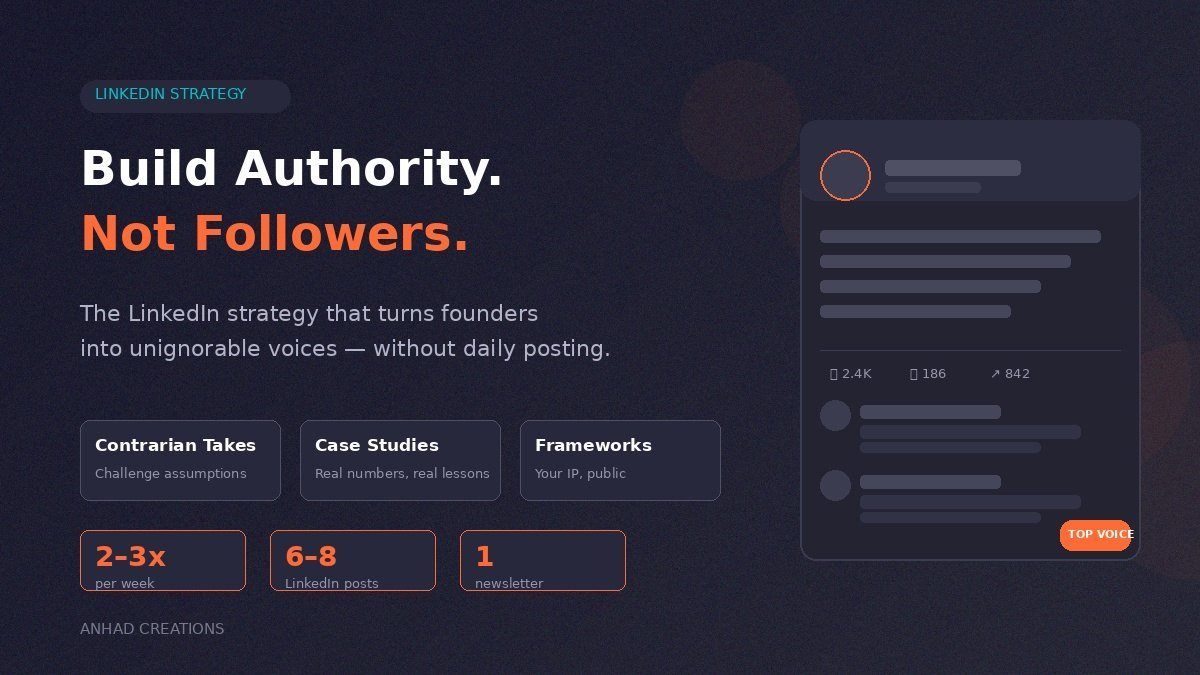
2–3 posts per week
Each post is a substantive piece of thought leadership — contrarian take, case study, or framework. Not motivational quotes. Not reposts. Original thinking.
1 LinkedIn Newsletter per month
Long-form definitive takes (1,500–2,000 words) that get indexed by search engines and build serious authority. This is where you publish your manifestos.
Meaningful engagement daily
Not "Great post!" spam. Thoughtful comments on 3–5 posts from people in your target audience. Add value to their content. Build relationships, not visibility.
This rhythm is achievable through the Anhad Creations 4-Hour Model. One session per month produces 6–8 LinkedIn posts, 1 newsletter, and supporting content for other channels. The founder does not write daily. The founder thinks deeply once — and the editorial team deploys it.
LinkedIn vs. Instagram for Founders: Different Jobs, Same Voice
We get this question constantly: "Should I focus on LinkedIn or Instagram?"
For B2B founders in India, the answer is LinkedIn first, Instagram second. But not instead. Both.
LinkedIn is where you build professional authority. It is where investors discover you, where talent evaluates you, and where enterprise buyers research you before the first meeting. It is the primary channel for B2B founder branding.
Instagram is where you build personal relatability. It humanises the founder. It shows the person behind the position. It creates emotional connection that makes the professional authority feel approachable.
The rule: same voice, different depth. Your LinkedIn post might be a 1,200-word analysis of pricing strategy. Your Instagram post about the same topic might be a 30-second Reel of you explaining the concept over coffee. The insight is the same. The format is different. The person is the same.
That is omnichannel authority — and it is what separates memorable founders from forgettable ones.
Measuring What Matters: The Founder LinkedIn Scorecard
Stop looking at follower count. Here is what actually matters:
| Metric | Why It Matters | Target |
|---|---|---|
| Conversation Shift | Do new contacts say "I have been following your work"? | 80%+ of new meetings |
| DM Quality | Inbound from investors, partners, high-ticket customers | 3–5 qualified/week |
| Content Recall | People reference specific posts or frameworks | 1–2 mentions/week |
| Trust Velocity | Speed from first contact to serious conversation | Under 2 meetings |
| Save/Share Rate | People saving your content for later reference | 5%+ of impressions |
Follower count is a lagging indicator of relevance. Inbound quality is the leading indicator of revenue.
From Invisible to Unignorable: The 90-Day LinkedIn Shift
Founders who commit to this approach see three shifts within the first quarter:
- Clarity: You discover what you actually think about your industry. The writing process reveals patterns in your own thinking that you did not know you had.
- Rhythm: Your audience starts expecting your content. They save your posts. They reference your frameworks in their own writing. You become part of the conversation.
- Conversion: Inbound shifts from "What does your company do?" to "I have been following your work on pricing strategy. Can we talk?" That is the difference between a cold pitch and a warm conversation.
The LinkedIn Strategy That Outlasts Algorithm Changes
Algorithms change. Features change. The LinkedIn of 2024 is not the LinkedIn of 2026. But one thing does not change: the market rewards depth.
Founders who build authority through original thinking, consistent voice, and genuine expertise do not need to chase algorithm hacks. They become the signal in the noise. Their content gets shared regardless of the algorithm. Their name gets mentioned in rooms they are not in.
That is the difference between renting attention and building authority. Between followers and influence. Between being seen and being sought.
If you are ready to stop chasing vanity metrics and start building unignorable LinkedIn authority, book a strategy session. We will map your first month of LinkedIn content — and show you exactly how 4 hours becomes the presence that moves your business forward.